Accidents involving three or more vehicles are often considered chain-reaction collisions. These types of incidents can be confusing and scary, and it can be immensely complex to recover compensation in the aftermath. Proving liability for a chain-reaction collision is crucial for a successful outcome of your claim. Here, we want to discuss who may be at fault for a chain-reaction collision in Arizona.
Arizona Chain-Reaction Collisions Occur in Various Ways
What are the first things that we need to stress is that the definition of a chain-reaction collision is not concrete. In theory, a chain-reaction collision is any type of collision that begins with one or more vehicles and then impacts other vehicles, pedestrians, bicyclists, motorcyclists, etc. The reality is that there is no way to possibly describe all chain-reaction scenarios in one article.
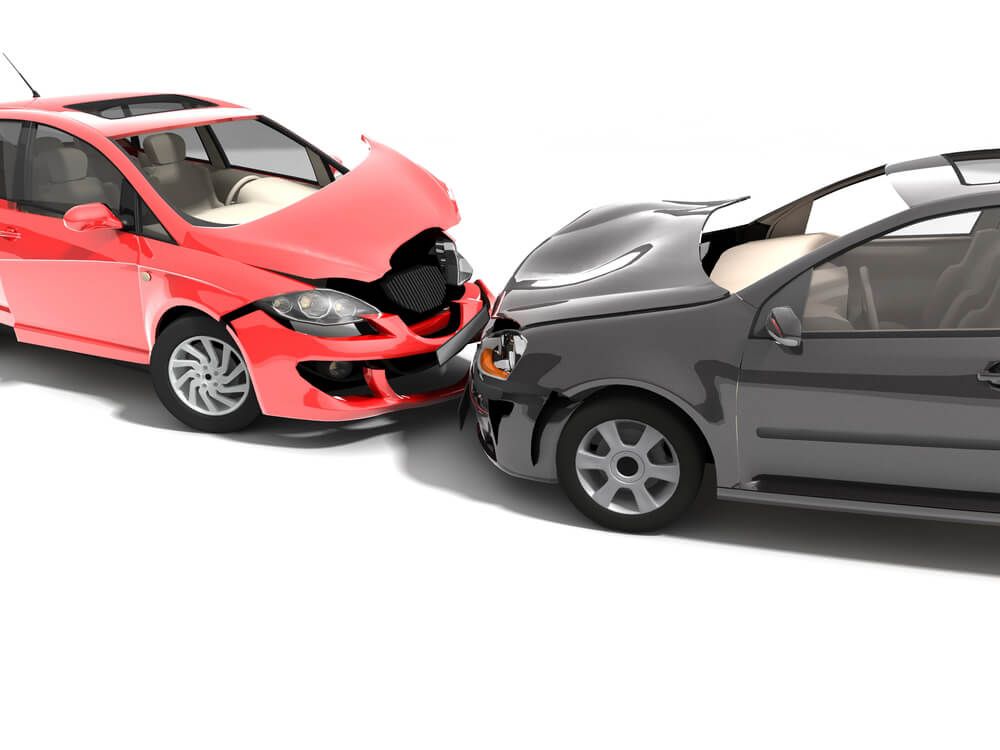
When there is an initial collision between two vehicles or a vehicle in a stationary object, and this initial impact creates enough of a hazard to affect others in the area, this is a chain reaction. There is no set amount of vehicles or individuals that have to be involved in order for something to be defined as a chain-reaction collision, but we will usually assume that this means three or more vehicles have created the "chain."
There are various scenarios where chain-reaction collisions can occur. For example, we could have one vehicle traveling on a highway and striking a patch of water, leaving the vehicle hydroplane into another vehicle or the median. This could subsequently cause other vehicles behind this initial collision to become involved in the crash. Thus, we have a chain reaction.
However, in other situations, we can see chain-reaction collisions happening at a stoplight or stop sign. If one driver has stopped appropriately but is rear-ended by another driver who failed to stop, this could push the initial vehicle into the intersection and into other vehicles, creating a chain-reaction collision.
Regardless of how chain-reaction collision occurs in Arizona, it is crucial for fault to be properly determined in order for those involved to recover compensation.
Determining Fault For a Chain-Reaction Car Crash
Determining liability after a chain-reaction collision is incredibly complex. A crash investigation after a simple two-car vehicle accident can be confusing, and this confusion will be compounded when there is a chain reaction involving three or more vehicles.
There will need to be an extensive investigation conducted by law enforcement officials as well as any insurance carriers or legal teams involved. Some of the evidence gathered will include statements from other drivers and passengers, statements from eyewitnesses nearby, the police reports, video surveillance from nearby cameras, photographs taken by those at the scene, and more.
In some cases, it may be necessary to work with an accident reconstruction expert who can piece together what happened based on the evidence and then render this into 3D models and computer-generated graphics to show insurance carriers and juries what likely occurred. With legal help from a Phoenix personal injury lawyer, you may recover compensation for your injuries in a chain reaction car accident.
We strongly encourage any person injured in a chain-reaction collision to work with a skilled
Phoenix car accident attorney who can handle every aspect of their claim. An Arizona car accident attorney can use their resources to obtain all the evidence needed to prove liability and then represent their client against the insurance carriers or in court.